
Navigating the Ethical Minefield of AI Porn Generation

The emergence of AI-powered content creation tools has revolutionized the adult entertainment industry, with AI-generated explicit content taking center stage. This innovation has sparked intense debates surrounding ethical implications and the future of pornography.
As artificial intelligence adult content becomes increasingly sophisticated, concerns about consent, privacy, and the potential impact on society have come to the forefront. The development of AI porn generators raises important questions about the boundaries between technology and human intimacy.
Key Takeaways
- The rise of AI-generated explicit content is transforming the adult entertainment industry.
- Ethical concerns surrounding consent and privacy are paramount.
- The impact of AI porn generation on society is a pressing issue.
- Debates about the future of pornography are intensifying.
- The boundaries between technology and human intimacy are being redefined.
The Rise of AI-Generated Adult Content
The emergence of AI-generated adult content marks a significant shift in the industry. AI-driven porn generation represents a paradigm shift in the adult content industry, offering unprecedented levels of customization and realism.
Current State of the Technology
The current state of AI-generated adult content is characterized by sophisticated algorithms that can create hyper-realistic pornographic videos and images. Deep learning models are at the forefront of this technology, enabling the creation of content that is often indistinguishable from real footage.
Key Platforms and Tools
Several key platforms and tools have emerged, facilitating the creation and dissemination of AI-generated adult content. These include:
- Deep learning software
- AI model training datasets
- Content creation platforms
Accessibility and Barriers to Entry
While the technology has become more accessible, there are still barriers to entry, including the need for significant computational resources and expertise in AI model training.
Growth Trajectory and Market Demand
The growth trajectory of AI-generated adult content is on an upward trend, driven by increasing demand for customized and realistic content.
Statistical Trends and Projections
Statistical trends indicate a significant increase in the consumption of AI-generated adult content, with projections suggesting continued growth.
Consumer Demographics
Consumer demographics are varied, with a notable interest from tech-savvy individuals and those seeking unique content experiences.
Understanding How To AI Generate Porn: The Technical Foundation
The technical foundation of AI-generated pornography is rooted in advanced deep learning models. These models have revolutionized the way adult content is created, offering unprecedented levels of realism and customization.
Deep Learning Models Behind the Technology
At the heart of AI-generated adult content are deep learning models, particularly Generative Adversarial Networks (GANs) and Diffusion Models. These models are capable of generating highly realistic images and videos.
GANs and Diffusion Models
GANs consist of two neural networks that work together to generate new content. One network creates images, while the other evaluates them, ensuring that the generated content is realistic. Diffusion models, on the other hand, work by reversing a diffusion process that adds noise to the data until it becomes a random noise signal.
Training Data Requirements
The effectiveness of these models depends heavily on the quality and quantity of the training data. Vast datasets of adult content are used to train these models, enabling them to generate realistic images and videos.
| Model Type | Training Data Requirement | Output Quality |
|---|---|---|
| GANs | High Volume | High Realism |
| Diffusion Models | High Volume | High Detail |
From Text-to-Image to Video Generation
The technology has evolved significantly, from generating static images from text prompts to creating complex videos. This evolution is driven by advancements in text-to-image and video generation capabilities.
Evolution of Generative Capabilities
Initially, AI models were limited to generating static images. However, with advancements in technology, these models can now generate videos, offering a more immersive experience.
Technical Limitations and Challenges
Despite the advancements, there are still significant technical challenges to overcome, including improving the coherence and stability of generated videos.
The future of AI-generated adult content looks promising, with ongoing research aimed at improving the quality and realism of generated content.
The Ethical Quandary of Synthetic Adult Content
As AI-generated adult content becomes more prevalent, ethical questions surrounding its creation and distribution come to the forefront. The technology’s ability to create highly realistic content raises significant concerns about consent, authenticity, and the potential for misinformation.
Consent Issues in the Digital Age
The use of AI to generate adult content often involves the likenesses of real individuals, raising critical questions about consent. In many cases, the people whose images are used to train AI models have not given their explicit consent for such use.
Redefining Consent for AI-Generated Content
The concept of consent needs to be reevaluated in the context of AI-generated content. Traditional notions of consent may not be directly applicable to AI-generated images or videos, as they involve complex algorithms and data processing.
The Ethics of Using Real People as References
Using real people’s likenesses as references for AI-generated content without their consent is a significant ethical concern. It is crucial to establish clear guidelines on how to handle such references ethically.
“The use of AI in generating adult content challenges our understanding of consent and privacy. It’s a complex issue that requires a multifaceted approach to resolve.”
The Blurring Line Between Real and Artificial
The sophistication of AI-generated content has reached a point where distinguishing between real and artificial is increasingly difficult. This blurring of lines raises concerns about authenticity and the potential for spreading misinformation.
Authenticity Concerns
The ability to create highly realistic synthetic content challenges our perception of reality. Ensuring the authenticity of digital content is becoming a pressing issue.
Potential for Misinformation
AI-generated adult content can be used to create convincing deepfakes, potentially leading to the spread of misinformation. This has serious implications for individuals and society as a whole.
| Ethical Concern | Description | Potential Impact |
|---|---|---|
| Consent Issues | Use of real people’s likenesses without consent | Violation of privacy and personal rights |
| Authenticity Concerns | Difficulty in distinguishing real from AI-generated content | Erosion of trust in digital media |
| Potential for Misinformation | Creation of convincing deepfakes | Spread of false information with serious consequences |
The ethical quandary surrounding synthetic adult content is complex and multifaceted. Addressing these challenges will require a collaborative effort from technology developers, policymakers, and society at large to establish clear guidelines and safeguards.
Legal Gray Areas in AI-Generated Pornography
The emergence of AI-generated pornography has created a labyrinth of legal gray areas that challenge existing regulatory frameworks. As this technology continues to evolve, it raises significant questions about the adequacy of current laws to address the unique issues posed by AI-generated content.
Current Legislation and Regulatory Gaps
The legal landscape surrounding AI-generated pornography is complex and varies significantly across different jurisdictions. Existing laws often struggle to keep pace with the rapid advancements in AI technology.
US Legal Framework
In the United States, the legal framework governing AI-generated pornography is multifaceted, involving federal and state laws. However, there are significant gaps in regulation, particularly concerning the non-consensual creation and distribution of AI-generated adult content.
International Legal Variations
Internationally, the legal approaches to AI-generated pornography differ widely. Some countries have stricter regulations on adult content, while others have more lenient laws. This variability creates challenges for global platforms distributing AI-generated content.
Copyright and Intellectual Property Concerns
AI-generated pornography also raises complex questions about copyright and intellectual property. The ownership of AI-generated content is a particularly contentious issue.
Ownership of AI-Generated Content
The question of who owns AI-generated content—whether it be the creator of the AI, the AI itself, or another entity—is a matter of ongoing legal debate.
Legal Precedents and Ongoing Cases
Several legal cases are currently working their way through the courts, potentially setting important precedents for the ownership and regulation of AI-generated content.
| Legal Aspect | Current Status | Potential Impact |
|---|---|---|
| Ownership of AI-generated content | Unclear, subject to ongoing legal cases | Significant implications for creators and distributors |
| Regulation of AI-generated pornography | Varies by jurisdiction, gaps in regulation | Potential for increased legal clarity, but challenges in enforcement |
| Copyright and intellectual property rights | Complex, evolving legal landscape | Impacts the development and distribution of AI-generated content |
The legal gray areas surrounding AI-generated pornography highlight the need for ongoing legislative attention and judicial clarity. As the technology continues to evolve, it is crucial that legal frameworks adapt to address the unique challenges posed by AI-generated adult content.
The Psychological Impact of AI Adult Content
The psychological impact of AI adult content is a complex issue, influencing various aspects of consumers’ lives. As this technology continues to evolve, it’s crucial to understand its effects on individuals and society as a whole.
Effects on Consumers and Society
AI-generated adult content is changing the way people consume adult material, potentially altering intimacy perceptions and relationship dynamics. The ease of access to highly personalized content may lead to increased isolation or unrealistic expectations in personal relationships.
Changing Perceptions of Intimacy
The availability of AI-generated adult content can distort perceptions of intimacy, making it essential to examine how this affects consumers’ understanding of healthy relationships.
Relationship Impacts
Research suggests that excessive consumption of adult content, including AI-generated material, can negatively impact relationship satisfaction and communication.
Addiction Potential and Mental Health Considerations
The addiction potential of AI adult content is a significant concern, with some consumers potentially developing compulsive behaviors around its use. This raises important questions about the impact on mental health.
Comparison to Traditional Pornography
Studies comparing AI-generated adult content to traditional pornography are needed to understand the relative impacts on mental health and behavior.
Therapeutic Applications and Concerns
While some researchers explore the potential therapeutic applications of AI-generated content, concerns about its uncontrolled use and potential negative effects on mental health remain.
In conclusion, the psychological impact of AI adult content is multifaceted, requiring a nuanced understanding of its effects on consumers and society. As this technology continues to evolve, ongoing research and open dialogue are essential to mitigate potential negative consequences and explore potential benefits.
Privacy Concerns and Digital Identity Theft
With the advent of sophisticated AI algorithms, the threat of digital identity theft and privacy violations has escalated. The creation and dissemination of AI-generated adult content, particularly deepfakes and non-consensual imagery, have raised significant concerns regarding individual privacy and security.
Deepfakes and Non-Consensual Imagery
Deepfakes, which are AI-generated images or videos that convincingly depict individuals in compromising or false situations, have become a major privacy concern. These can range from celebrity targets to everyday individuals.
Celebrity Targeting and Implications
Celebrities are often the targets of deepfakes, with their images being used to create non-consensual adult content. This not only violates their privacy but can also have professional and personal repercussions.
Everyday Victims and Recourse Options
However, it’s not just celebrities who are affected. Everyday individuals can also fall victim to deepfakes, often with devastating consequences. Victims can seek legal recourse, but the process can be complex and challenging.
| Protection Measures | Description | Effectiveness |
|---|---|---|
| Technical Safeguards | Using software to detect and remove deepfakes | High |
| Legal Protections | Legislation to prevent and penalize non-consensual imagery | Moderate |
| Awareness and Education | Educating the public about the risks and signs of deepfakes | High |
Protection Measures for Individuals
To combat the risks associated with deepfakes and non-consensual imagery, individuals can employ several protection measures.
Technical Safeguards
Technical solutions, such as AI-powered detection tools, can help identify and mitigate deepfakes. These tools are continually evolving to keep pace with the technology used to create deepfakes.
Legal Protections and Limitations
Legal protections are also being developed, with some jurisdictions implementing specific laws to address non-consensual imagery. However, the effectiveness of these laws can vary, and enforcement remains a challenge.
In conclusion, while the threat of digital identity theft and privacy violations through AI-generated content is significant, there are various protection measures that individuals can take. By staying informed and leveraging both technical and legal safeguards, we can mitigate these risks.
The Economic Disruption to the Adult Entertainment Industry
AI-generated adult content is transforming the industry, bringing about significant economic disruption. The adult entertainment sector, known for its adaptability and innovation, is now facing challenges and opportunities due to advancements in AI technology.
Impact on Human Performers
The introduction of AI-generated content has raised concerns regarding the impact on human performers. The potential for job displacement is a significant issue, as AI-generated content could become a more cost-effective and efficient alternative.
Job Displacement Concerns
The possibility of job displacement among human performers is a pressing concern. As AI-generated content becomes more sophisticated, there’s a risk that it could replace human performers in certain roles or productions.
Performer Rights and Advocacy
In response to these concerns, there’s a growing need for advocacy on behalf of performers. Ensuring that the rights of human performers are protected and that they are not unfairly disadvantaged by the emergence of AI-generated content is crucial.
New Business Models Emerging
While AI-generated content poses challenges, it also enables the creation of new business models within the adult entertainment industry. Innovative approaches, such as AI-human collaborations and customized content services, are becoming increasingly popular.
AI-Human Collaborations
Collaborations between AI systems and human performers are opening up new creative possibilities. This hybrid approach can lead to unique content that leverages the strengths of both human creativity and AI efficiency.
Subscription and Customization Services
The rise of AI-generated content also facilitates the development of subscription-based services and customized content offerings. Consumers can now access tailored content that meets their specific preferences, potentially increasing customer satisfaction and loyalty.
The economic disruption caused by AI-generated adult content is multifaceted. While there are challenges, particularly concerning human performers, the industry is also witnessing the emergence of innovative business models that could drive growth and revenue.
| Business Model | Description | Potential Impact |
|---|---|---|
| AI-Human Collaborations | Content created through the collaboration of AI and human performers. | Increased creativity and efficiency. |
| Subscription Services | Consumers pay for access to exclusive, AI-generated content. | Steady revenue stream. |
| Customization Services | AI-generated content tailored to individual consumer preferences. | Enhanced customer satisfaction. |
Responsible Development of AI Adult Content
Responsible development of AI adult content is crucial to mitigate potential harms and ensure a safe online environment. As the technology continues to evolve, it’s essential for developers to prioritize ethical considerations and implement effective safeguards.
Ethical Guidelines for Developers
Establishing ethical guidelines is a critical step in the responsible development of AI adult content. This involves industry self-regulation efforts to ensure that developers adhere to a common set of principles.
Industry Self-Regulation Efforts
Industry self-regulation can help prevent the misuse of AI technology by establishing clear guidelines and best practices for developers. This includes promoting transparency and accountability within the industry.
Transparency Requirements
Transparency is key to building trust and ensuring that AI adult content is developed responsibly. Developers should be transparent about their methods and data sources to facilitate scrutiny and improvement.
Implementing Safeguards and Restrictions
To prevent the misuse of AI adult content, it’s essential to implement effective safeguards and restrictions. This includes age verification systems to prevent minors from accessing inappropriate content.
Age Verification Systems
Age verification systems are a crucial safeguard against the misuse of AI adult content. These systems help ensure that adult content is only accessible to adults, reducing the risk of harm to minors.
Content Watermarking and Authentication
Content watermarking and authentication techniques can help identify and verify AI-generated content, making it easier to distinguish between real and synthetic content. This can help mitigate the risks associated with deepfakes and non-consensual imagery.
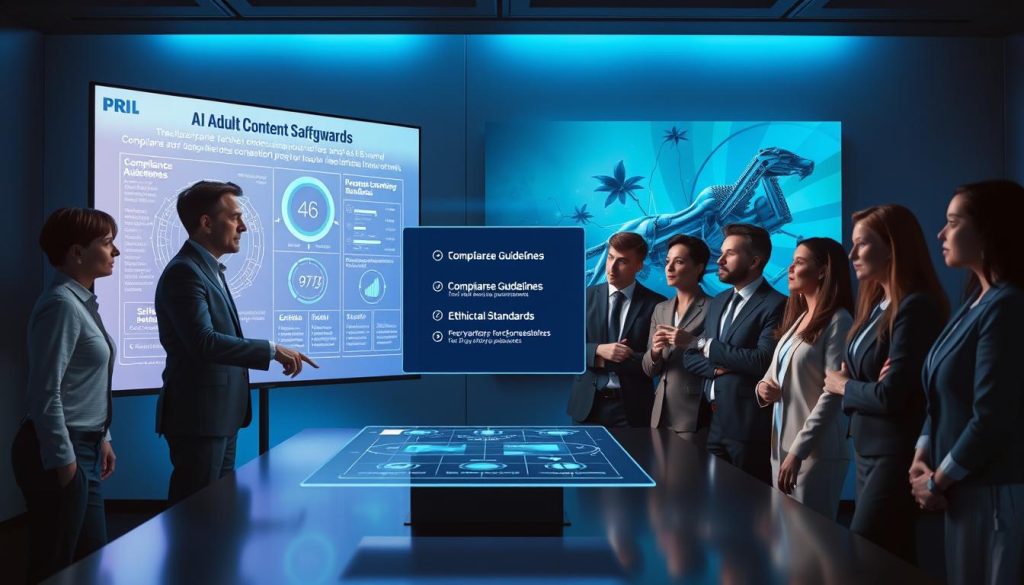
By prioritizing ethical guidelines, industry self-regulation, and effective safeguards, developers can ensure the responsible development of AI adult content. This approach will help mitigate potential harms and promote a safer online environment.
The Role of Platform Policies in Regulating AI Porn
Platform policies are crucial in determining how AI-generated adult content is moderated and regulated online. As AI technology continues to evolve, platforms face increasing challenges in balancing the need to allow legitimate content while preventing the dissemination of harmful or illegal material.
Current Approaches by Major Platforms
Major platforms have adopted different strategies to address the issue of AI-generated pornography. Social media platforms, for instance, have implemented strict policies against explicit content.
Social Media Policies
Social media platforms like Facebook and Twitter have community guidelines that prohibit adult content, including AI-generated pornography. These platforms use a combination of human moderators and AI tools to detect and remove violating content.
Adult Content Hosting Sites’ Strategies
Adult content hosting sites, on the other hand, have different approaches. Some sites have implemented strict verification processes to ensure that all content is produced and shared consensually. Others have adopted more lenient policies, relying on user reporting to identify problematic content.
| Platform Type | Policy Approach | Content Moderation Tools |
|---|---|---|
| Social Media | Strict Prohibition | AI + Human Moderation |
| Adult Content Hosting | Varied Approaches | User Reporting + AI Tools |
Challenges in Content Moderation
Despite these efforts, platforms face significant challenges in moderating AI-generated content. Two major issues are AI detection limitations and the sheer volume and velocity of content being uploaded.
AI Detection Limitations
Current AI detection tools are not foolproof and can struggle to identify sophisticated AI-generated content, especially as the technology improves.
Volume and Velocity Problems
The rapid pace at which content is uploaded to platforms makes it difficult to moderate effectively, leading to potential loopholes for illegal content to slip through.
In conclusion, while platform policies play a critical role in regulating AI-generated pornography, there are significant challenges that need to be addressed through technological innovation and more effective moderation strategies.
Educational Perspectives: Informing Without Enabling
In the era of AI-generated content, educational perspectives play a vital role in shaping the conversation around its societal impact. As AI-generated adult content becomes more sophisticated, it’s crucial to educate the public about its implications without inadvertently promoting it.
Teaching Digital Ethics
One of the key areas of focus in education should be on teaching digital ethics. This involves developing curricula that address the ethical considerations surrounding AI-generated content.
Curriculum Development for Schools
Schools should incorporate modules that discuss the ethical implications of AI-generated content, encouraging students to think critically about the technology and its potential consequences.
Public Awareness Campaigns
Beyond the classroom, public awareness campaigns can play a significant role in educating the broader community about the issues surrounding AI-generated adult content.
Critical Media Literacy in the AI Age
Another crucial aspect is fostering critical media literacy. This involves teaching individuals how to identify synthetic content and understand the techniques used to manipulate media.
Identifying Synthetic Content
Educational programs should include training on how to recognize AI-generated content, helping individuals to be more discerning consumers of media.
Understanding Manipulation Techniques
Furthermore, understanding the manipulation techniques used in AI-generated content can help individuals to critically evaluate the media they consume.
By focusing on these educational perspectives, we can work towards creating a more informed and responsible community in the face of advancing AI technology.
Future Trajectories of AI in Adult Content Creation
Emerging trends in AI are set to transform the landscape of adult content creation in unprecedented ways. As we look to the future, it’s clear that technological advancements will play a pivotal role in shaping the industry.
Technological Advancements on the Horizon
The next generation of AI technology is expected to bring about significant improvements in adult content creation. Two key areas of development are haptic integration and VR applications.
Haptic Integration and VR Applications
Haptic technology, which allows users to feel tactile sensations, is poised to revolutionize the adult entertainment industry. When combined with VR, it creates a more immersive experience. This could potentially increase user engagement and satisfaction.
Personalization and Customization Trends
AI-driven personalization is becoming increasingly sophisticated, allowing for tailored experiences that cater to individual preferences. This trend is expected to continue, with content being customized to meet specific user needs.
Potential Societal Adaptations
As AI-generated adult content becomes more prevalent, society will need to adapt to the changing landscape. This includes evolving norms and standards around what is considered acceptable.
Changing Norms and Standards
The proliferation of AI-generated content may lead to a shift in societal attitudes towards adult entertainment. As the technology becomes more mainstream, there may be a greater acceptance of AI-generated content.
Potential Regulatory Frameworks
Governments and regulatory bodies will need to respond to the emergence of AI-generated adult content. This could involve the development of new regulatory frameworks to address issues such as consent, privacy, and intellectual property.
In conclusion, the future of AI in adult content creation is complex and multifaceted. As technological advancements continue to emerge, it’s crucial to consider the potential societal adaptations and regulatory responses that will shape the industry.
Balancing Innovation with Ethical Responsibility
In the realm of AI-generated adult content, striking a balance between innovation and ethical responsibility is crucial for sustainable development. As this technology continues to evolve, it’s essential to address the ethical implications proactively.

Finding Common Ground Among Stakeholders
A multi-disciplinary approach is necessary to bring together experts from various fields, including technology, ethics, law, and social sciences. This collaboration can help identify potential ethical issues and develop comprehensive solutions.
Multi-Disciplinary Approaches
- Involving ethicists in the development process to ensure that ethical considerations are integrated from the outset.
- Engaging legal experts to navigate the complex regulatory landscape surrounding AI-generated content.
- Consulting with social scientists to understand the potential societal impacts and develop strategies to mitigate any negative effects.
Balancing Free Expression and Harm Prevention
One of the key challenges is balancing the right to free expression with the need to prevent harm. This involves implementing measures to prevent the creation and dissemination of harmful content while respecting creative freedom.
Creating Sustainable Ethical Frameworks
Developing adaptable guidelines that can evolve with the technology is crucial. These frameworks should be designed to address emerging ethical issues proactively.
Adaptable Guidelines for Evolving Technology
- Regularly updating ethical guidelines to reflect new developments in AI technology.
- Establishing a feedback mechanism to incorporate insights from users, developers, and other stakeholders.
International Cooperation Models
Given the global nature of AI-generated content, international cooperation is essential for developing consistent ethical standards. This can involve collaborative efforts between governments, industry leaders, and international organizations to establish common guidelines.
By adopting a balanced approach that considers both innovation and ethical responsibility, we can foster a sustainable and responsible development of AI-generated adult content.
Conclusion: Charting an Ethical Path Forward
As AI-generated pornography continues to evolve, it is essential to chart an ethical path forward, ensuring responsible development and minimizing harm. The development of AI-generated adult content raises significant ethical concerns, including consent issues, the blurring line between real and artificial, and potential psychological impacts.
To address these concerns, stakeholders must work together to establish clear guidelines and regulations. This includes implementing safeguards and restrictions, promoting digital ethics, and fostering critical media literacy in the AI age. By doing so, we can ensure that the growth of AI-generated pornography is balanced with responsible development and a commitment to minimizing harm.
Ultimately, the future of AI-generated adult content depends on our ability to navigate the complex ethical landscape and chart a course that prioritizes both innovation and responsibility. By working together, we can create a more sustainable and equitable future for all stakeholders involved.